Save $20 on your first clean with code FIRST20

Bathroom Cleaning Guide: Step-by-Step Tips for a Sparkling Space

A bathroom is one of the busiest rooms in your home, and it shows. Between wet towels on the floor, soap scum sticking to the tub, and water marks on glass shower doors, it can quickly go from fresh to a dirty bathroom. Add in mildew on bathroom tiles and germs on the toilet seat, and the space becomes more than just messy.

Even when everything looks fine, germs can still be hiding. Bathroom faucets, sinks, and toilets are among the germiest spots in a home, which makes a quick wipe far from enough.

This complete guide will show you how to clean your bathroom step by step using the right tools and cleaning supplies. By the time you finish, you will know how to turn this high-traffic room into a squeaky-clean space you actually enjoy.

Why Bathroom Cleaning Is Important?

Neglecting bathroom cleaning does more than leave behind stains. Skipping the sink area or forgetting the toilet brush for a week allows bacteria like E. coli and salmonella to thrive on damp surfaces. The toilet seat, bathroom floors, and even faucet handles quickly become a breeding ground when cleaning is ignored. What starts as a small ring in the toilet bowl or a bit of grime on bathroom tiles can soon turn into a stubborn problem that is far harder to remove.

Beyond hygiene, a clean bathroom also changes how your home feels. Walking into a well-maintained bathroom with fresh towels, streak-free glass shower doors, and a sink area free of clutter makes the room more inviting. Guests notice it too, and the impression of a fresh space often lingers long after they leave.

The health benefits go even further. When moisture builds up without regular cleaning, mold and mildew can grow. Over time, this can trigger respiratory issues and skin irritation. Tasks as simple as washing the shower curtain, scrubbing bathroom tiles with the right cleaning supplies, and replacing wet towels help keep the air clean and reduce those risks.

Finally, maintenance is just as important as hygiene and health. Skipping a toilet brush session for a few weeks can lead to mineral buildup inside the toilet bowl that no cleaner will easily remove. The same goes for bathroom tiles, grout, and faucet handles. Regular care extends the life of your fixtures, prevents stains from setting in, and keeps the entire bathroom looking fresh.

Prerequisites for Bathroom Cleaning

Before you start scrubbing the bathroom, it helps to have the right tools and cleaning products ready. Without proper supplies, you end up working harder than necessary and may still leave behind germs, soap scum, or water marks.

Some people prefer store-bought cleaners for convenience, while others like DIY mixtures made from baking soda, lemon, and white vinegar. Both approaches can work, and professionals often bring eco-friendly products upon request to suit different needs.

Here is a checklist of what to gather before you clean your bathroom:

  • Disinfectant spray or wipes: Ideal for quickly wiping faucet handles, light switches, and other high-touch areas to prevent cross-contamination.
  • All-purpose cleaner: Works on most bathroom surfaces and saves you from juggling too many products. Choose an eco-friendly option if you prefer fewer chemicals.
  • Glass cleaner or vinegar solution: Keeps mirrors, glass shower doors, and other surfaces streak-free. Vinegar is a natural alternative, though commercial glass cleaners may work faster on stubborn water marks.
  • Toilet bowl cleaner and brush: Essential for removing stains and mineral buildup. You can squirt toilet cleaner for quick action, or use baking soda and vinegar if you want a gentler option.
  • Baking soda, lemon, vinegar: These DIY staples can tackle soap scum, deodorize drains, and leave the sink area fresh without relying on heavy chemicals.
  • Scrub sponges, microfiber cloths, mop and bucket: Use a clean microfiber cloth for delicate surfaces, a scrub brush for grout, and a mop for the bathroom floors. Always keep separate clothes to avoid cross-contamination.
  • Gloves, mask, and ventilation fan: Protect yourself from fumes and prevent irritation when using stronger cleaning products. Good ventilation also helps surfaces dry faster.

Things to Remember Before You Start Cleaning Your Bathroom

Jumping into bathroom cleaning without a plan often makes the task feel longer and more tiring than it has to be. With a little preparation, you can save effort and cut cleaning time by as much as 30 percent. Here are the steps worth remembering before you pick up your scrub brush.

1. Declutter First

Cleaning around piles of towels, bottles of shampoo, and half-empty toilet paper rolls is frustrating.

Start by removing everything from counters, shelves, and the sink area. Set towels aside for washing and move toiletries into a basket. The empty surfaces give you room to work and let cleaning supplies reach every corner.

2. Ventilation Matters

No one wants to feel trapped while scrubbing a dirty bathroom.

Turn on the exhaust fan or open a window before using stronger cleaning products. Fresh air reduces chemical odors and helps humidity escape, which also keeps mold from forming on bathroom tiles and the shower curtain.

3. Pre-treat Tough Stains

Scrubbing alone rarely works against soap scum or mineral buildup.

Spray toilet bowl cleaner inside the toilet, apply an all-purpose cleaner to grout, and mist the tub with a vinegar solution before you start other tasks. By the time you return, the stains will already have loosened, making them easier to remove.

4. Clean Top to Bottom

A systematic order makes all the difference. Begin with light fixtures, mirrors, and faucet handles. Then move down to the sink area, counters, and glass shower doors.

Finish with the bathroom floors. Cleaning in this order keeps dirt and water marks from landing on freshly cleaned areas, and it saves you from repeating steps.

Quick 5-Minute Pre-Clean Checklist

  • Put away towels, bottles, and personal items
  • Open a window or switch on the fan
  • Spray toilet, tub, and grout with cleaner
  • Dust light fixtures and picture frames
  • Gather microfiber cloths and paper towels for wiping clean

Step-by-Step Bathroom Cleaning Process

Step 1: Mirrors and Glass

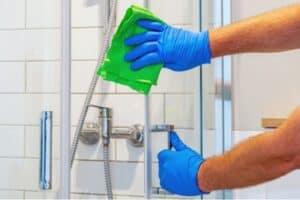
The quickest way to make a bathroom look instantly brighter is by tackling the glass surfaces first. Mirrors, shower doors, and even small glass shelves catch light, so when they are streaked or spotted, the whole room feels dull. Starting here sets the tone for the rest of your cleaning session and immediately makes the space look more inviting.

When dealing with soap scum, grab a spray bottle and mix vinegar with a little dish soap. Spritz the solution on the glass shower doors or mirrors, let it sit, and then wipe with a clean microfiber cloth.

For hard water stains, try a paste of baking soda and warm water or spray vinegar directly onto the marks before scrubbing gently. This not only helps remove soap scum but also restores the shine without leaving streaks.

One thing to keep in mind is safety. It is tempting to use abrasive pads for faster results, but they can leave scratches behind. Stick to non-scratching tools, paper towels, or a soft cloth so you can get squeaky clean mirrors and glass doors without damaging them.

With the reflections gleaming, you will already feel like the bathroom is halfway done.

Step 2: Sink, Countertops, and Fixtures

Once your mirrors and glass are shining, it is time to move down to the sink area, where things often get messy fast. The sink may look harmless, but this little zone collects toothpaste splatters, soap scum, and water marks almost daily.

Toothbrush holders, in particular, are a hidden danger. Studies show they rank among the top bacteria hotspots in the bathroom, often holding more germs than the toilet seat. That alone makes them worth a thorough scrub.

Do not stop at the basics. Soap dishes and dispensers are easy to forget, yet they become slimy and sticky if ignored for too long. Give them a good rinse with hot water, then wipe them clean with a disinfectant cloth or an all-purpose cleaner. This small step instantly makes the entire bathroom feel fresher.

Faucets deserve special attention, too. Mineral buildup around the aerator is common, but there is a simple trick. Fill a small bag with vinegar, secure it around the faucet head, and let it soak for about fifteen minutes. Once removed, scrub gently with an old toothbrush and rinse with warm water. The result is a faucet that sparkles and flows like new.

Step 3: Toilet Deep Clean

No one volunteers for this step, but skipping it is not an option. The toilet is one of the busiest fixtures in the entire bathroom, and it deserves more than a quick squirt of toilet cleaner and a flush. A proper deep clean not only keeps it looking fresh but also prevents bacteria from spreading to other surfaces.

Start with the tank, which is often ignored. Over time, bacteria can build up inside the flush tank and transfer into the bowl. Pour in a vinegar solution, let it sit, and scrub gently with a scrub brush before flushing. Once the tank is fresh, move on to the bowl.

Flush to wet the surface, then apply toilet bowl cleaner generously under the rim and on visible stains. Let the cleaner sit for a few minutes, then scrub thoroughly with a toilet brush, paying extra attention to the rim and the underside where buildup hides.

The work does not stop there. Wipe down the toilet seat, lid, and handle with a disinfectant cloth, then clean the base and surrounding bathroom floor where dust and drips mysteriously gather. These overlooked spots can make the difference between a dirty bathroom and a squeaky clean one.

If you are fighting stubborn mineral rings, a pumice stone works wonders without scratching the porcelain.

Step 4: Shower and Bathtub Area

If the toilet is the chore nobody wants, the shower and tub are where the real battle begins. This is where soap scum builds up into a visible ring, shampoo bottles clutter the corners, and bathroom tiles quietly collect mildew. Tackling this zone makes the biggest visual impact, so it is worth doing right.

Begin by clearing away all bath products. Spray the entire tub with an all-purpose cleaner or a vinegar and dish soap mix, letting it soak into stains. Pay special attention to the soap scum ring around the tub, and scrub it away with a non-abrasive sponge. This method helps you clean the bathroom thoroughly while keeping surfaces free from scratches.

Tiles and grout need their own care. Spray them with a solution of vinegar or a specialized cleaner and let it sit for several minutes before scrubbing with a brush. Grout lines are notorious for holding onto moisture, which makes them a breeding ground for mold. Regular deep cleaning here prevents long term staining.

Do not forget the showerhead. Mineral deposits can block the flow of water over time. Fill a small bag with vinegar, tie it around the showerhead, and let it soak for at least fifteen minutes. After removing, run hot water through the showerhead to clear out any buildup.

Shower curtains and liners also need attention. Fabric curtains can usually be tossed in the washing machine, while liners may need replacing every few months. This simple habit keeps mildew from spreading and keeps the space smelling fresh.

Special care matters when it comes to materials. Acrylic tubs scratch more easily and should only be cleaned with a gentle sponge and mild cleaning products. Porcelain tubs are sturdier and can handle a bit more scrubbing power, though abrasive tools are still best avoided.

Step 5: Cabinets, Drawers, and Shelves

Storage spaces are the easiest areas to overlook, yet they collect more than just extra soap and towels. Dust sneaks into the corners, half-used products pile up, and forgotten items sit untouched for months. Cleaning these spaces keeps your bathroom organized and prevents hidden messes from spoiling a freshly scrubbed room.

Begin by emptying every cabinet and drawer. Wipe the inside with a clean microfiber cloth and a mild cleaner, paying attention to corners where dust tends to gather. As you sort, check expiration dates on skincare, medicines, or old cleaning supplies and clear out anything past its prime. Decluttering while you clean makes the space more functional.

Handles, knobs, and shelf edges also need attention. These high-touch spots can hold germs, so give them a quick wipe with disinfectant. If you notice dried residue from soap or lotion containers, clean the area thoroughly before putting items back.

Step 6: Floors and Baseboards

Even after scrubbing every other corner, the bathroom is not truly clean until the floors and baseboards are done. This is where dust, hair, and moisture quietly collect, especially behind the toilet, where buildup hides out of sight. Giving this area extra care makes the room feel completely finished.

Start by sweeping the entire bathroom floor to remove loose dirt and hair. Tile floors are easy to refresh with a mop and an all-purpose cleaner or warm water mixed with dish soap.

Grout, however, requires closer attention. Because it is porous, dirt sinks in quickly. Scrubbing grout lines with baking soda paste or a vinegar solution lifts the embedded grime and brings back a brighter look.

Do not overlook the baseboards. Quickly wiping them with a damp cloth or disinfectant cloth clears away dust and prevents it from resettling on freshly mopped floors. For small bathrooms, a quick dry mop can make the process easier since it leaves fewer streaks and dries faster in tight spaces.

Step 7: Vents, Fans, and Light Fixtures

Dusty vent grilles, cloudy bulbs, and humming exhaust fans not only look untidy but can also push particles back into a room you just deep cleaned. Giving them attention adds polish and helps the space stay cleaner for longer.

Always begin with safety. Switch off the power to the fan and lights at the circuit breaker before starting. This extra step ensures you can work without worry around electrical parts.

For the exhaust fan, remove the cover and vacuum the grill and motor housing using a brush attachment. A light pass with a damp cloth and mild cleaner clears away grease or stubborn buildup.

Keep water use to a minimum since moisture and electricity are never a good mix. If your fan uses a filter, replace it according to the manufacturer’s instructions to maintain proper airflow.

Move next to the lights and switches. Dust the bulbs, wipe the switch plates, and clean any decorative covers to restore brightness if your bathroom has a wall heater or radiator grille. Vacuum between the slats to remove lint and follow with a gentle wipe using a clean microfiber cloth.

Step 8: Fabrics and Laundry Items

Once the air is clear from freshly cleaned vents and fans, it is time to look down at the softer side of the bathroom. Fabrics like bath mats, towels, and curtains might seem secondary, but they hold onto water, odors, and germs far longer than hard surfaces do. Freshening them up makes the entire bathroom feel genuinely complete.

Start with the bath mats. They carry moisture every single day and can become a breeding ground if left too long. Wash them weekly in hot water, following care instructions to keep the backing intact. A clean mat not only looks better but also feels fresher underfoot.

Move next to the towels. If they smell musty even after a wash, add a splash of white vinegar during the cycle. This simple step removes buildup that detergent alone misses. Rotate towels often and avoid leaving wet towels hanging for too long, since damp fabric quickly invites mildew.

Finally, take care of the shower curtain or liner. Fabric curtains usually wash well in the machine, while plastic liners either need a hand scrub or replacement every few months. Dry both completely before rehanging to prevent mold from creeping back.

Step 9: Trash Cans and Odor Control

After refreshing the fabrics, one small detail still has the power to ruin all that effort. The trash can may seem insignificant, but it is often the source of lingering odors that make a bathroom feel less than clean.

Begin by emptying the bin and giving it a thorough wash. Rinse with hot water and use an all-purpose cleaner or disinfectant spray on both the inside and outside. Pay close attention to the rim where residue often collects. Let the can dry completely before adding a new liner.

For natural odor control, sprinkle a thin layer of baking soda at the bottom before lining the can. Baking soda absorbs smells effectively and keeps the trash can fresh between cleanings.

To finish, introduce a light scent to the space. A cotton ball with a drop of essential oil hidden inside the bin or a gentle citrus spray in the room keeps the bathroom smelling crisp without being overwhelming.

Bathroom Deep Cleaning vs. Maintenance Cleaning

Not every bathroom cleaning session needs to be a full scrub from top to bottom. The difference between maintenance cleaning and deep cleaning lies in both frequency and intensity. Understanding this balance helps you keep the space consistently fresh without feeling overwhelmed.

Maintenance cleaning focuses on the surfaces you touch and see daily. Wiping the sink area with a disinfectant cloth, spraying the mirror with glass cleaner, and quickly wiping counters or faucet handles are all part of this routine.

Daily or weekly attention stops soap scum, water marks, and germs from piling up. In fact, even a short wipe down each day can cut deep cleaning time in half.

Deep cleaning, on the other hand, is less frequent but far more detailed. It usually happens once a month and involves tasks like scrubbing grout, descaling the showerhead, or cleaning behind the toilet where dust and bacteria often hide.

Homes with high humidity, heavy use, or children may need this level of cleaning more often.

To make it simple, here is a quick reference chart:

Weekly Maintenance Cleaning Monthly Deep Cleaning
Wipe mirrors and glass surfaces Scrub grout and bathroom tiles
Disinfect the sink area and faucet handles Descalcify the showerhead with vinegar
Clean the toilet seat and handle Clean behind and around the toilet base
Replace wet towels with fresh ones Wash or replace the shower curtain/liner
Sweep bathroom floors Wash bath mats in hot water
Empty trash can Deep clean cabinets, drawers, and shelves

Keeping up with weekly maintenance ensures your bathroom always feels fresh, while monthly deep cleaning restores details that are easy to miss. Together, they create a balance between daily comfort and long-term care.

Keep Your Bathroom Fresh and Healthy

Even the most determined scrubber knows there are limits. Stubborn grout that refuses to brighten, mold that sneaks back overnight, or simply not enough hours in the day can make bathroom cleaning feel like an uphill climb. Add in the need for extra detailed sanitation before guests arrive or when moving out, and the task can quickly become overwhelming.

That is where consistency matters. Regular upkeep keeps bacteria from spreading, prevents odors from settling in, and protects your fixtures from long-term damage. A well-maintained bathroom does more than sparkle; it protects your health, adds comfort to your daily routine, and saves you time down the road.

Reach out to Modern Maids for your house cleaning needs. Our team provides professional bathroom cleaning in Dallas and Austin with flexible booking options that fit around busy schedules. Whether you need a quick refresh or a full deep clean, we are committed to leaving your bathroom spotless and fresh.

Call us at (469)-430-8860 or book your cleaning online today. Enjoy a bathroom that not only looks clean but feels like the best room in the house.

FAQs

What is the correct order to clean a bathroom?

The best way to clean a bathroom is to follow a top-to-bottom method. Start with mirrors, glass shower doors, and light fixtures so dust and water marks fall downward. Next, move on to the sink area, countertops, and faucet handles, then scrub the toilet bowl and wipe the toilet seat, lid, and handle. After that, clean the shower head, tub, and bathroom tiles before finishing with the bathroom floors and baseboards. This order prevents cross-contamination and leaves the entire bathroom squeaky clean.

What’s the best thing to clean a bathroom with?

There is no single product that works for every surface, but using the right tools makes the job easier. An all-purpose cleaner works well on countertops, while a glass cleaner or vinegar solution is best for mirrors and glass doors. Toilet bowl cleaner and a sturdy toilet brush keep the toilet spotless, and baking soda with warm water is effective for grout. A clean microfiber cloth or disinfectant cloth helps with wiping clean without leaving streaks.

What is the best hack for cleaning bathrooms?

One of the most effective hacks is pre treating problem areas. Spray toilet cleaner in the bowl, apply vinegar on the shower head, and use baking soda paste on grout before moving to easier surfaces. By the time you return, stains will lift with far less scrubbing. Another great trick is using a mix of vinegar and dish soap in a spray bottle to remove soap scum from glass shower doors and tubs. These hacks cut deep clean time significantly.

What do hotels use to clean glass shower doors?

Hotels rely on professional bathroom cleaning products that remove soap scum and water marks quickly. Many housekeeping teams use a vinegar and dish soap mix sprayed onto glass shower doors, followed by wiping clean with a dry microfiber cloth or paper towel for streak-free shine. For stubborn hard water stains, baking soda paste is often applied. Some hotels also use Bar Keepers Friend on tough spots, ensuring the glass doors look crystal clear for every guest.

How often should you clean your bathroom?

For a well maintained bathroom, aim for a quick wipe down every day and a maintenance cleaning once a week. This includes wiping the sink area, disinfecting the toilet seat and handle, and sweeping the bathroom floors. A monthly deep clean is important to scrub grout, remove soap scum, and descale the shower head. In high humidity homes or busy households, bathrooms may need deep cleaning more often to prevent mold and mildew from spreading.

How do you get rid of mold and mildew in bathrooms?

Mold and mildew often grow on shower curtains, grout, and damp bathroom floors. To get rid of them, spray a mixture of white vinegar and warm water on the affected area and scrub with a brush. For grout stains, baking soda paste works well. Always replace wet towels regularly and use the ventilation fan to reduce humidity. If the mold is stubborn, stronger cleaning products may be needed, but avoid muriatic acid unless absolutely necessary.

Are natural cleaning products effective for bathrooms?

Yes, natural cleaning products can be very effective for bathroom cleaning when used correctly. White vinegar removes water marks from glass shower doors, while baking soda deodorizes drains and lifts dirt from grout. Lemon can help remove soap scum and leaves a fresh scent. A damp cloth with these DIY options can clean most surfaces, though some tasks, like removing mineral buildup, may require commercial products. Combining natural methods with proper tools often leaves the entire bathroom looking fresh.

How do you keep a bathroom smelling fresh after cleaning?

To keep your bathroom smelling fresh, start by washing bath mats and replacing wet towels so they do not become a breeding ground for odors. Sprinkle baking soda at the bottom of the trash can before adding a liner, and wipe the sink area regularly to prevent buildup. Essential oils on a cotton ball or a light spray of all purpose cleaner with citrus fragrance adds a pleasant touch. Good ventilation from the fan also helps maintain a crisp scent.

Should you clean grout with bleach or vinegar?

Bleach can whiten grout quickly, but it is harsh and may damage bathroom tiles if used too often. Vinegar is a safer option for routine cleaning, especially when paired with baking soda paste and a scrub brush. For a deep clean, apply vinegar to grout lines, let it sit, and scrub with an old toothbrush or scrub brush. This removes embedded dirt without harming other surfaces. Reserve bleach for stubborn stains only, and always rinse thoroughly with hot water.